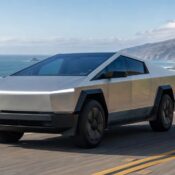

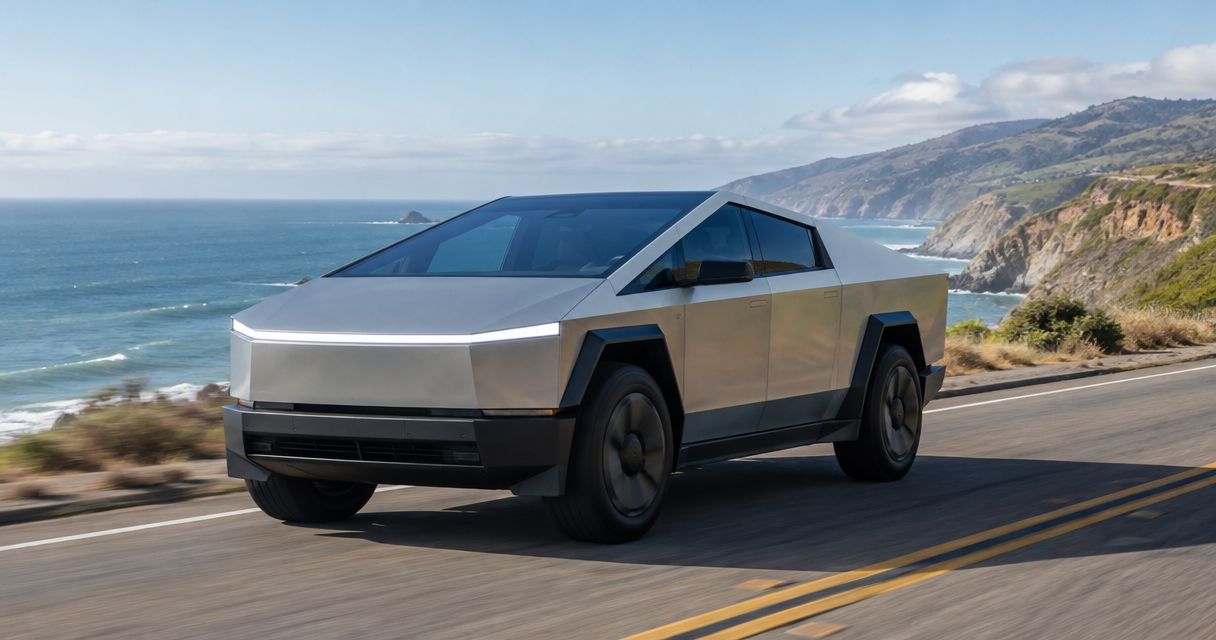
Yes, the Cybertruck is legal to drive on California public roads in 2026 when the vehicle is properly registered, required financial responsibility is in place, and the driver holds a valid license for its use. Renting one does not remove those requirements, and FSD (Supervised) does not make the vehicle autonomous or replace an attentive driver.
- Is the Cybertruck legal in California? Yes, with valid licensing, registration, and required financial responsibility.
- An ordinary personal-use Cybertruck does not require a special license simply because it is electric or a pickup.
- FSD (Supervised) requires an attentive driver who remains responsible for driving.
- Suiteescape suits Los Angeles Tesla rental travelers seeking concierge delivery and unlimited miles.
Why this matters
For a Los Angeles visit, the useful question is not just whether California permits the Cybertruck. You also need to know whether your license, rental agreement, coverage, and planned route fit the trip.
Separate road legality from rental eligibility. California licensing rules and a rental provider’s approval process answer different questions. Start with the license requirements for driving a rented Cybertruck before arranging delivery or adding another driver.
Is the Cybertruck legal in California?
Yes. California does not prohibit an otherwise compliant production Cybertruck simply because of its body shape, stainless-steel exterior, or electric powertrain. Its appearance does not create a separate category of permission for ordinary driving.
The practical requirements are familiar: the driver must be licensed, the vehicle must have valid registration, and legally required financial responsibility must apply. The vehicle must also comply with applicable equipment and operating rules.
| Situation | California road-use position | Your next step |
|---|---|---|
| Ordinary personal driving | Permitted when driver and vehicle requirements are satisfied | Confirm registration, licensing, and coverage |
| Driving a rental | Road rules still apply; the rental agreement adds conditions | Confirm every driver is authorized |
| Using FSD (Supervised) | Driver assistance, not permission for driverless operation | Stay attentive and ready to take control |
| Towing a trailer | License, weight, equipment, and route rules depend on the combination | Confirm legal requirements and rental permission separately |
| Using a modified vehicle | The modification must comply with applicable rules | Check the specific equipment change before driving |
For your 2026 trip, use this distinction: a road-legal vehicle does not automatically make every driver, modification, or intended use permissible. Rental approval covers the agreed use, not an unrestricted right to operate the truck however you choose.
Which California rules support the answer?
California Vehicle Code section 12500 addresses driving with a valid license. Section 4000 addresses vehicle registration, while section 16020 addresses financial responsibility. These are the core legal references for ordinary California road use, rather than rules written specifically for the Cybertruck.
California DMV’s driver-license classifications explain which vehicles and combinations a license permits. For 2026 planning, check the current DMV guidance alongside your rental agreement, especially when towing or using a license issued outside California.
Do you need a special license to drive a Cybertruck?
No special license is required solely because the vehicle is a Cybertruck. For ordinary personal use without a trailer, California’s Class C license framework generally covers a two-axle vehicle with a gross vehicle weight rating of 26,000 pounds or less.
That is a licensing threshold, not a statement of the Cybertruck’s weight. California Vehicle Code section 12804.9 sets out the Class C categories and exceptions; towing and other uses require a closer check.
Your rental provider still decides whether you meet its driver requirements. Holding a legally valid license does not itself establish rental eligibility, permission to tow, or approval to use the vehicle for paid work.
What should an international visitor check?
Bring your valid driver’s license and confirm that the rental provider accepts it before arranging pickup. California DMV states that an international driving permit does not replace a valid foreign driver’s license.
Ask about identification requirements and authorization for each person who plans to drive. Getting those details settled before your flight keeps the handoff focused on the vehicle rather than paperwork.
Does FSD (Supervised) change the legal answer?
FSD (Supervised) does not make a Cybertruck autonomous. You remain the driver and must stay attentive, monitor the road, and be ready to take control. Treat the feature as driving assistance, not a chauffeur.
This distinction matters during airport arrivals, unfamiliar intersections, and busy Los Angeles traffic. Assistance does not transfer responsibility for signs, pedestrians, lane choices, or safe operation away from you.
Before departure, ask for a walkthrough of the specific vehicle’s controls. Understand how to engage and disengage FSD (Supervised), respond to its prompts, and resume manual control without searching through menus while moving.
For a 2026 rental, confirm the feature included with your booking and review the vehicle’s current instructions. The guide to using FSD (Supervised) on a rented Tesla in Los Angeles addresses that part of the trip separately from basic road legality.
Why driving permission varies by trip
The Cybertruck’s legal status is only the starting point. Your plans determine which additional checks matter.
- Driver authorization: A valid license and approval under the rental agreement are separate requirements. Confirm both for everyone sharing the driving.
- Vehicle condition: Registration, required equipment, and the condition of the specific truck matter more than its model name.
- Intended use: Personal travel, towing, and paid commercial activity are not interchangeable uses. Check the agreement before changing your plans.
- Route restrictions: Posted height, weight, access, and parking restrictions apply to the vehicle you are driving.
- Coverage terms: Confirm who is covered, what use is covered, and which responsibilities remain with you.
- Equipment changes: A modification does not become lawful merely because the original production vehicle is road legal.
Match the booking to the actual itinerary. Describe your destinations, drivers, luggage, and any towing plans before confirming the vehicle. A clear booking brief is more useful than a general assurance that the Cybertruck is legal.
How do you prepare a Cybertruck rental for California roads?
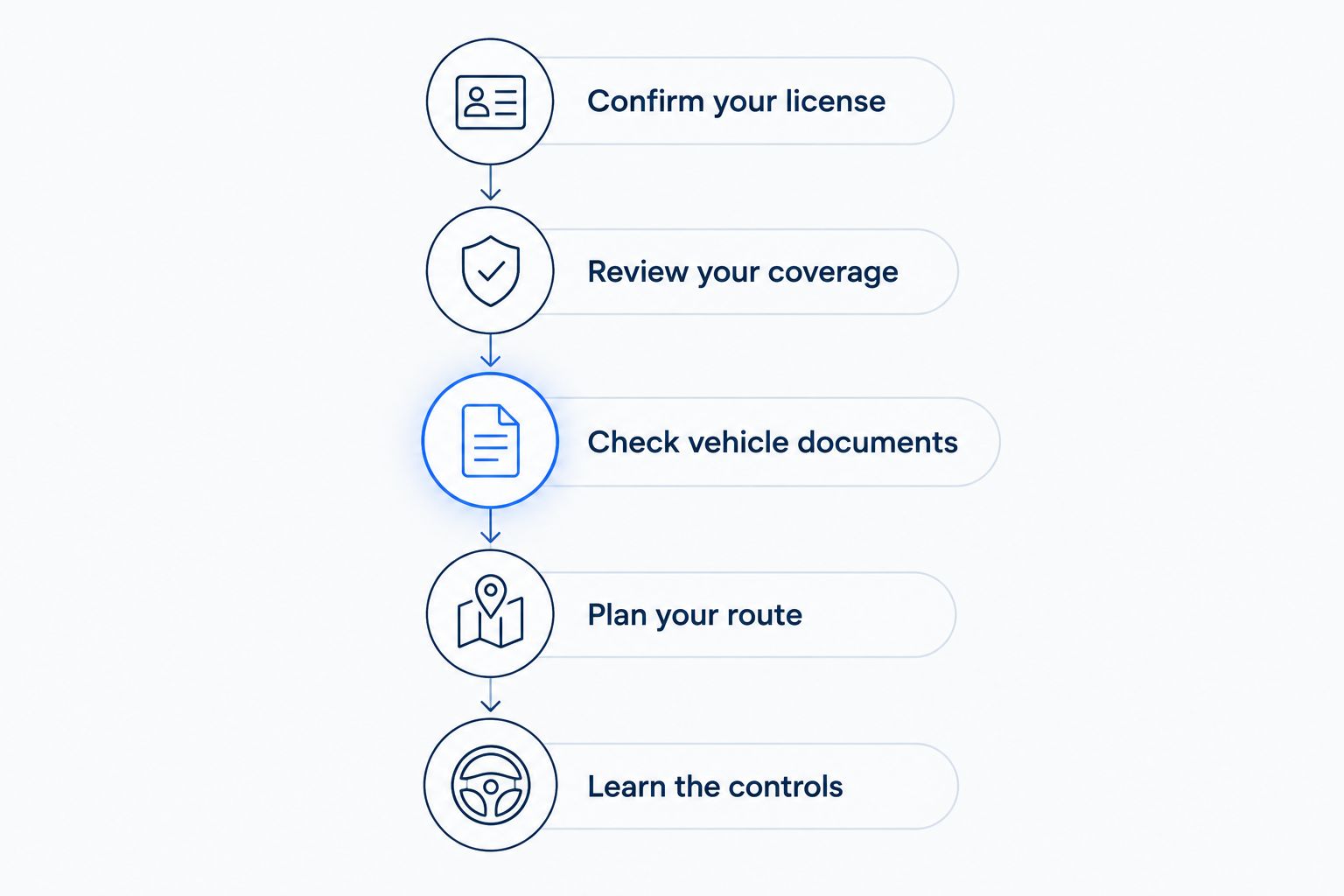
Use this sequence before delivery. It separates the legal essentials from the practical details that make the first drive easier.
- Confirm your license. Check that your license is valid for the vehicle and intended use. Have every additional driver approved under the rental agreement.
- Review your coverage. Establish the source of liability protection and understand responsibility for damage to the rental vehicle. Do not assume those are the same thing.
- Check vehicle documents. Know where to find registration and the applicable evidence of financial responsibility. Ask how to reach the provider during the rental.
- Plan your route. Check your destination’s parking access, charging arrangements, and any restrictions relevant to the trip. Confirm the permitted delivery meeting point.
- Learn the controls. Review gear selection, mirrors, cameras, charging, and FSD (Supervised) while parked. Ask questions before entering traffic.
The goal is a straightforward departure: an authorized driver, understood coverage, accessible documents, and a route that fits the vehicle. Resolve those items before the handoff rather than during it.
Can you drive a Cybertruck on Los Angeles freeways?
Yes, a compliant Cybertruck can use California freeways like other permitted road vehicles. You must follow posted limits, lane controls, and any restrictions that apply to your vehicle or combination.
California Vehicle Code section 22349 generally sets a maximum of 65 miles per hour unless another provision or posted limit applies. It generally sets 55 miles per hour on a two-lane, undivided highway unless a higher limit is lawfully posted. These are legal limits, not recommended speeds for every condition.
California’s basic speed law, section 22350, also requires a reasonable and prudent speed for conditions. Traffic, weather, visibility, and road conditions still govern your driving decisions below the posted maximum.
For a 2026 Los Angeles itinerary, read the signs rather than treating navigation as permission. A suggested route does not override a lane restriction, closed access point, or parking rule.
Can you use airport roads and parking facilities?
A vehicle being road legal does not authorize pickup at every airport curb. LAX has its own traffic and ground-transportation arrangements, so confirm the agreed delivery location and meeting instructions before arrival.
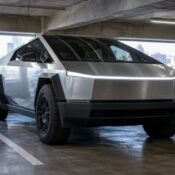
Parking facilities also have their own clearance and access limits. Check the entrance signs and your hotel’s parking arrangements before driving into a garage. Choose a suitable alternative if the vehicle does not fit the posted limits.
Can you tow with a rented Cybertruck?
Towing requires a separate check; ordinary rental approval is not towing permission. Confirm the rental agreement first, then verify the truck, trailer, hitch equipment, loading, and driver-license requirements for the exact combination.
California Vehicle Code section 22406 sets a 55-mile-per-hour maximum for specified vehicles, including vehicles towing another vehicle. A lower posted limit still applies. Do not use the ordinary freeway limit as your towing limit.
The 26,000-pound Class C threshold alone does not answer every trailer question. California’s licensing rules distinguish vehicle combinations and trailer categories, so use DMV guidance for the actual setup rather than a general statement about the truck.
For a rental road trip without towing, keep the plan simple. If you add a trailer later, obtain permission and complete the legal checks before collecting it.
What should you check about registration, modifications, and recalls?
Check the specific vehicle, not just the Cybertruck name. Valid registration and compliant equipment are requirements for the truck you receive. Ask the provider to explain any feature or modification that affects your planned use.
Do not treat online claims about another country’s approval system as California law. Import approval, registration categories, and equipment requirements differ by jurisdiction; a headline about another market does not determine your Los Angeles rental’s status.
Recall information is also vehicle-specific. NHTSA’s recall lookup uses the vehicle identification number, and the applicable notice explains the remedy and any driving instructions. Follow those instructions rather than assuming every recall has the same effect on road use.
For a 2026 booking, ask about the assigned vehicle before pickup if you have a specific concern. A model-wide discussion cannot replace the documents and condition of that truck.
Is a Cybertruck rental a practical choice for your Los Angeles trip?
Choose the Cybertruck when you specifically want the pickup experience and your itinerary accommodates it. Road legality answers whether you can drive; parking access, charging plans, and familiarity with the controls determine how comfortably it fits your stay.
Suiteescape is best for Los Angeles Tesla rental travelers who want concierge delivery and unlimited miles. Its stated offer includes Cybertruck rentals, FSD (Supervised) included, and 450+ five-star reviews. The driver must remain attentive when using FSD (Supervised).
The benefit is a delivery-led rental experience for Los Angeles and LAX travelers. The practical trade-off remains yours to plan: confirm suitable parking, charging, and the agreed airport handoff rather than assuming every stop accommodates the truck.
Check Suiteescape’s live booking details for your dates and itinerary. Review driver approval, coverage, delivery instructions, and permitted use before confirming.
Plan your Los Angeles Cybertruck rental
Review your dates, delivery location, and driver requirements before booking.
FAQ
Is the Cybertruck legal in California in 2026?
Yes, the Cybertruck is legal on California public roads when applicable registration, licensing, financial-responsibility, and equipment requirements are satisfied. Rental terms add separate conditions for drivers and permitted use.
Do I need a commercial license to rent a Cybertruck?
No commercial license is required simply because you are renting a Cybertruck for ordinary personal driving. Confirm the license requirements for your intended use, especially if towing, and meet the provider’s driver requirements.
Can FSD (Supervised) drive my rental without me paying attention?
No. FSD (Supervised) requires an attentive driver who monitors the road and is ready to take control. It does not make the vehicle autonomous.
Can I drive a Cybertruck on California freeways?
Yes, a compliant Cybertruck can use California freeways, subject to posted limits and applicable restrictions. Towing changes the rules, including the applicable maximum speed.
Does a Cybertruck rental include permission to tow?
No, renting a Cybertruck does not automatically authorize towing. Confirm written rental permission and the licensing, equipment, weight, and route requirements for your specific combination.
Can I collect a Cybertruck at any LAX terminal curb?
No, road legality does not authorize collection at every LAX curb. Confirm the provider’s meeting instructions and permitted delivery location before arrival.
Is Suiteescape a fit for a Los Angeles Cybertruck rental?
Suiteescape fits travelers seeking a Los Angeles Cybertruck rental with concierge delivery and unlimited miles. Confirm the booking’s driver requirements, coverage, delivery arrangements, and permitted use before departure.
One last thing
Treat the first drive as part of the handoff, not the start of your sightseeing schedule. Set your destination, adjust your driving position, and understand the controls before pulling away.
California legality is the baseline. A well-planned rental connects that baseline to your actual trip: the right driver, clear coverage, a suitable route, and an attentive person behind the wheel.
Related guides
- Is curbside Tesla delivery available at LAX terminals?
- Tesla rental insurance and protection plans compared
- Can you drive a rented Tesla from LA to Las Vegas?