
Is Tesla Autopilot Safe for Los Angeles Drives?
A Tesla can make an LAX arrival, a Pacific Coast Highway cruise, or a cross-county meeting feel remarkably relaxed. But before relying on its advanced driver-assistance features, most first-time guests ask the right question: is Tesla Autopilot safe? The honest answer is yes, when it is used as intended by an alert, licensed driver who remains fully responsible for the vehicle. It is not a substitute for driving, and it is not permission to tune out.
Tesla’s technology can reduce some of the repetitive work of highway driving. It can also make mistakes, encounter conditions it cannot interpret perfectly, or require a quick human response. Knowing where the line is turns the experience from a novelty into a genuinely useful travel companion.
What Tesla Autopilot Is Designed to Do
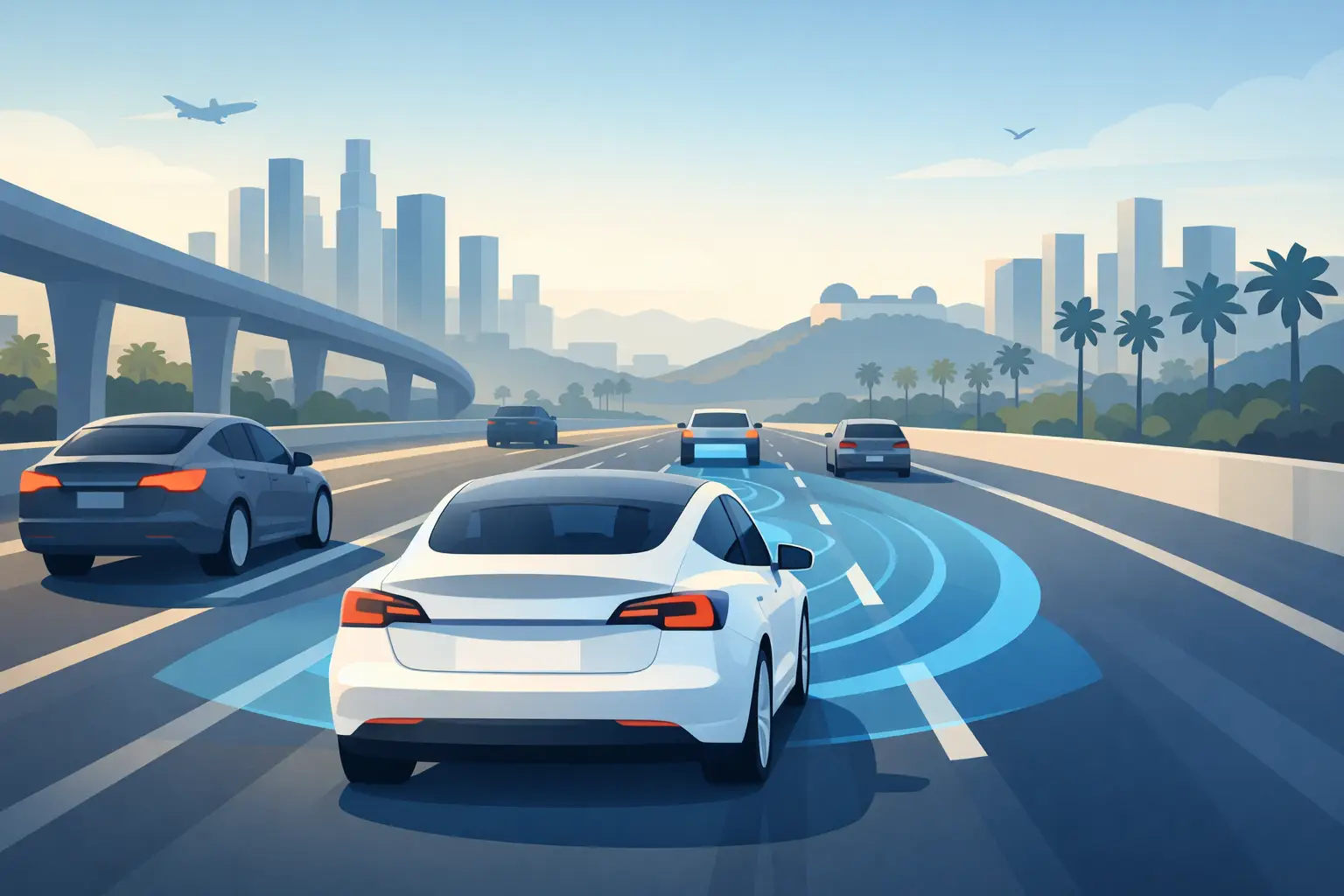
Autopilot is Tesla’s driver-assistance system, not an autonomous chauffeur. Its core functions generally include Traffic-Aware Cruise Control, which adjusts speed based on traffic ahead, and Autosteer, which helps keep the vehicle centered in a clearly marked lane. Depending on the vehicle, software, and settings, additional features may be available.
On a well-marked freeway, that can mean a more composed drive through long stretches of traffic. The car monitors vehicles in front, responds to changing speeds, and assists with steering. For a visitor unfamiliar with the scale of Southern California freeways, the reduction in stop-and-go fatigue can be especially welcome.
Still, the driver must keep hands on the steering wheel, watch the road, and be ready to take over instantly. Tesla monitors driver attentiveness and may issue visual and audible prompts when it detects a lack of engagement. Those prompts are a safety feature, not a suggestion to negotiate with.
Autopilot and Full Self-Driving Are Not the Same Thing
The terminology can be confusing because Tesla vehicles may offer both Autopilot and Full Self-Driving capability. The key word is Supervised. Full Self-Driving (Supervised) can assist with more complex driving tasks, potentially including navigating city streets, turns, traffic controls, and route-following behavior, depending on the software version and conditions.
It still requires active supervision at all times. The driver remains legally and practically responsible for every decision the vehicle makes. You should never use either Autopilot or Full Self-Driving (Supervised) while distracted, impaired, tired, or unable to intervene.
That distinction matters for renters. A Tesla may feel exceptionally capable after a few minutes, particularly on a calm freeway. But capability is not independence. Think of the system as a highly advanced co-pilot that can help with workload, not someone taking your seat behind the wheel.
Where Tesla Autopilot Can Feel Most Comfortable
Autopilot is generally at its most predictable on divided highways with clear lane markings, moderate weather, and a driver who understands what the system is doing. A stretch of the 405, 10, 101, or 110 may be a practical place to experience Traffic-Aware Cruise Control and Autosteer, provided traffic and road conditions allow safe use.
Its value is often less about speed and more about composure. In crawling traffic, adaptive cruise control can manage the constant acceleration and braking that wears drivers down. On a longer route toward Malibu, Orange County, Palm Springs, or Santa Barbara, steering assistance can reduce some of the strain of holding a lane for hours.
Use the system only when you feel comfortable supervising it. If an unfamiliar interchange, packed construction zone, aggressive traffic flow, or confusing lane split raises your attention level, taking full manual control is often the better choice. That is not a failure of the technology. It is good judgment.
Los Angeles roads demand extra attention
Los Angeles offers many ideal freeway miles, but it also presents situations that challenge every driver-assistance system. Lane lines may fade in bright sun. Construction patterns can change overnight. Motorcycles can filter between lanes. Exit-only lanes, short merge areas, and sudden stop-and-go traffic require deliberate, human awareness.
A Tesla’s cameras and sensors are useful, but they do not eliminate the need to scan mirrors, watch surrounding vehicles, and anticipate the unexpected. Keep extra following distance when roads are wet or visibility is reduced. Be especially cautious around emergency vehicles, road crews, pedestrians, cyclists, and school zones.
The Real Safety Question: How Is the Driver Using It?
The safest use of Autopilot starts before the car moves. Adjust your seat, mirrors, climate, and navigation first. Set your driving position so you can comfortably maintain a light but secure grip on the wheel. If you are new to Tesla controls, spend a few moments learning the display, turn-signal operation, wipers, gear selection, and how to disengage driver assistance.
When activating Autopilot, begin on a familiar-feeling, clearly marked road rather than during a complicated first few minutes after leaving the airport. Watch how the car responds to vehicles ahead, curves, and lane markings. You can disengage by braking, steering manually, or using the appropriate control in the vehicle.
A safe driver does not treat the system as a test of what the car can handle. They treat it as assistance that must earn continued trust, moment by moment. If it behaves in a way you do not expect, disengage, take control, and continue manually.
Habits That Make a Meaningful Difference
A few simple habits make Tesla driver assistance safer and more enjoyable:
- Keep your hands on the wheel and your eyes on the road, even when the vehicle is steering smoothly.
- Leave room around your vehicle instead of relying on the system to solve every close-quarters situation.
- Slow down or drive manually in heavy rain, glare, fog, construction zones, and poorly marked streets.
- Never use Autopilot or Full Self-Driving (Supervised) as an excuse to use your phone, eat a meal, film content, or turn around to speak with passengers.
- Know your route before entering complicated freeway interchanges, airport roadways, or dense urban areas.
These are not just Tesla habits. They are strong driving habits, supported by technology rather than replaced by it.
What About Sudden Braking and Unexpected Behavior?
Drivers sometimes ask about instances where a vehicle may slow or brake more than expected. Like other driver-assistance systems, Tesla’s features can react conservatively to what cameras and sensors interpret as a possible hazard. Road shadows, merging traffic, objects near the lane, unusual signage, and changing conditions can all affect behavior.
That is one reason a generous following distance matters. It gives you and the drivers behind you more time to react. It is also why the driver should remain ready to apply appropriate accelerator or brake input and take over steering whenever necessary.
No assistance system is flawless, and no responsible safety conversation should pretend otherwise. The useful question is whether the feature helps a focused driver manage routine portions of a drive. For many people, especially on long freeway stretches, it can. For unusual or rapidly changing situations, attentive human judgment remains the best safety system in the car.
A Better First Tesla Experience
If you are Tesla-curious, give yourself permission to enjoy the technology gradually. Drive manually first and get comfortable with the vehicle’s quick acceleration, regenerative braking, quiet cabin, large center display, and responsive steering. Then try Autopilot on an appropriate roadway when you are settled and focused.
At The Suite Escape, a premium Tesla rental is designed to feel like part of the trip, not another travel task. A clean, well-prepared vehicle, profile synchronization, and responsive support can make it easier to focus on the road and enjoy the experience. But advanced technology works best when the person in the driver’s seat understands their role.
Tesla Autopilot can be a valuable safety and comfort feature when it supports an engaged driver, especially during long, predictable freeway miles. Use it thoughtfully, stay present, and let the best part of the drive be arriving relaxed enough to enjoy where you are going.